Sites Prepared for New Construction Work
Demolition and Clean Outs in Buchanan for properties where existing materials must be removed before renovation begins
Walls covered in outdated paneling, floors with cracked tile, and ceilings with water-damaged drywall all need to come out before new finishes go in. Kalmer's Consulting handles demolition and clean outs that prepare residential and commercial properties for remodeling, removing materials in a sequence that protects structural elements you're keeping while clearing away everything scheduled for replacement. Selective demolition means taking out specific walls, fixtures, or finishes without damaging adjacent areas, which requires knowing where plumbing lines run, where electrical is routed, and how load-bearing walls differ from partition walls.
Demolition work addresses spaces where renovation can't proceed until old materials are cleared, where accumulated debris from previous projects blocks access to work areas, or where hazardous materials like mold-damaged drywall need professional removal. The process includes disconnecting utilities before demolition begins, protecting areas that aren't part of the project with barriers and coverings, and sorting debris for disposal or recycling based on material type.
Request an estimate to review what needs removal and how demolition will coordinate with your remodeling schedule.
What Selective Demolition Protects During Removal
Selective demolition involves removing specific elements—like non-load-bearing walls, old cabinetry, or flooring—without disturbing structural supports, plumbing risers, or electrical panels that remain part of the building. This requires identifying which walls carry weight from above, where HVAC ducts are concealed, and how far demolition can proceed before exposing systems that need to stay operational. Kalmer's Consulting coordinates demolition with the remodeling timeline so that utility disconnections happen just before removal and new rough-in work can start immediately after the site is clear.
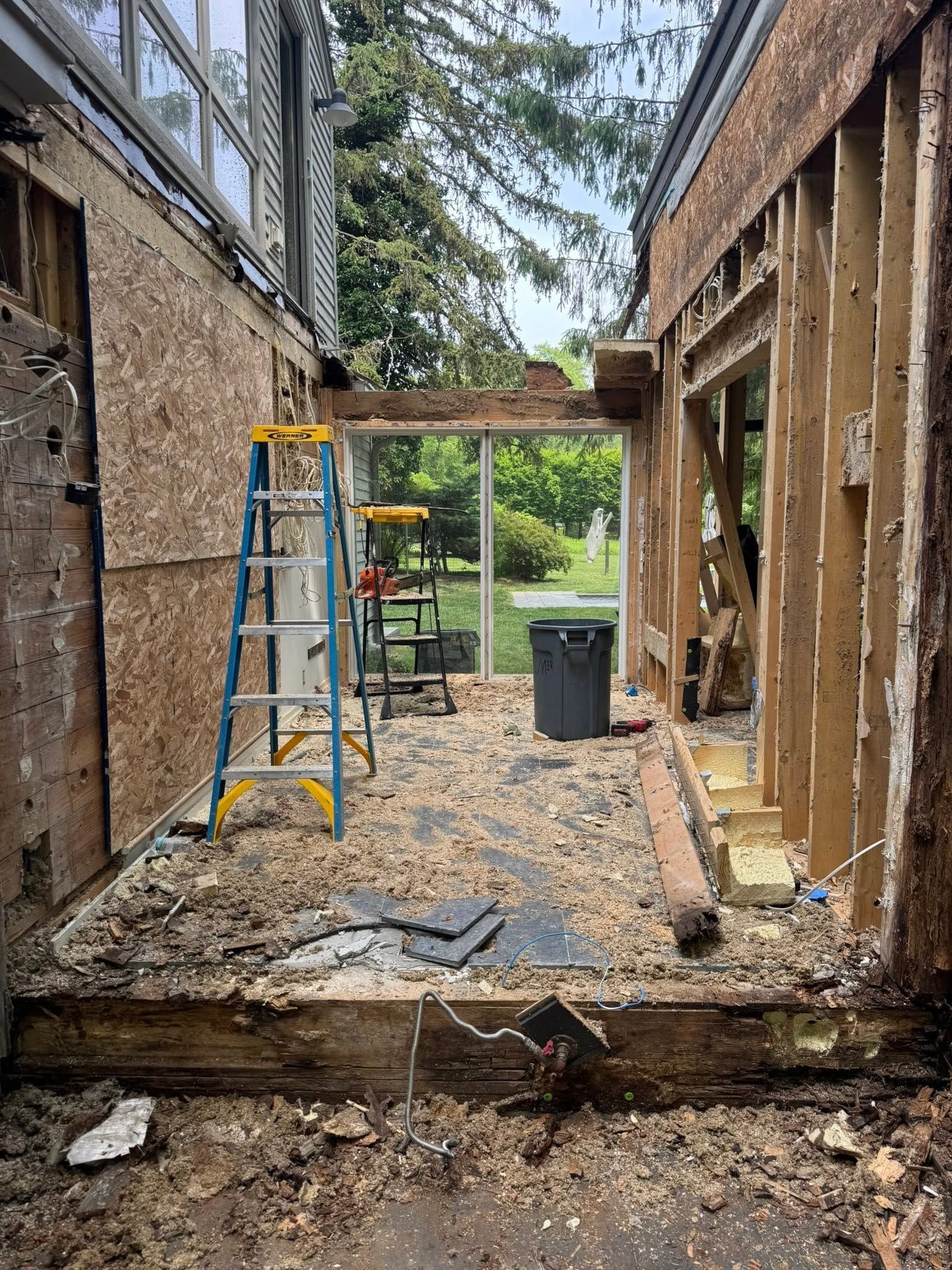
After demolition is complete, you'll see a workspace cleared of old materials, with structural framing exposed and ready for inspection or modification, and with debris removed so that contractors can move freely and measure accurately. The difference between organized demolition and haphazard removal shows up in how much dust spreads beyond the work zone, whether surrounding finishes are damaged during material extraction, and how quickly the next phase of work can begin without additional cleanup delays.
Clean out services go beyond demolition to remove accumulated items from basements, attics, garages, and commercial spaces where clutter or stored materials obstruct access or violate code requirements. This work often precedes property sales, estate settlements, or tenant turnovers where spaces need to be emptied before new occupants move in or before contractors can assess the condition of underlying systems.
Common Questions Before Demolition Begins
Property owners preparing for renovation or cleanout projects typically want to know how demolition affects timelines, what safety measures are involved, and how the work integrates with construction schedules.
What happens to utilities before demolition starts?
Water, gas, and electrical services are shut off at the source or disconnected from fixtures being removed to prevent leaks, shocks, and fire hazards during material extraction.
How do you protect areas that aren't part of the demolition?
Plastic sheeting and temporary barriers seal off adjacent rooms, floors are covered with protective materials to prevent damage from falling debris, and HVAC systems are turned off to avoid spreading dust through ductwork.
What's the difference between full and selective demolition?
Full demolition clears everything down to the structural shell, while selective demolition removes only specific elements—like interior walls or flooring—leaving plumbing, framing, and other systems intact for reuse or modification.
When should demolition be scheduled in relation to other work?
Demolition happens after permits are secured and before rough-in work begins, which allows contractors to assess existing conditions, identify necessary repairs, and proceed with new construction immediately after debris is removed.
How does demolition in Buchanan account for older building materials?
Homes built before 1980 may contain materials requiring special handling or testing, so demolition plans include inspections to identify any concerns before large-scale removal begins.
Kalmer's Consulting provides free estimates for demolition and clean out projects in Buchanan and surrounding communities. Reach out to discuss your project scope and coordinate removal with your renovation timeline.