Outdoor Spaces Designed for Low-Maintenance Use
Deck Construction in Buchanan for homeowners expanding outdoor living areas, replacing deteriorating wood decks, or adding functional entertainment spaces
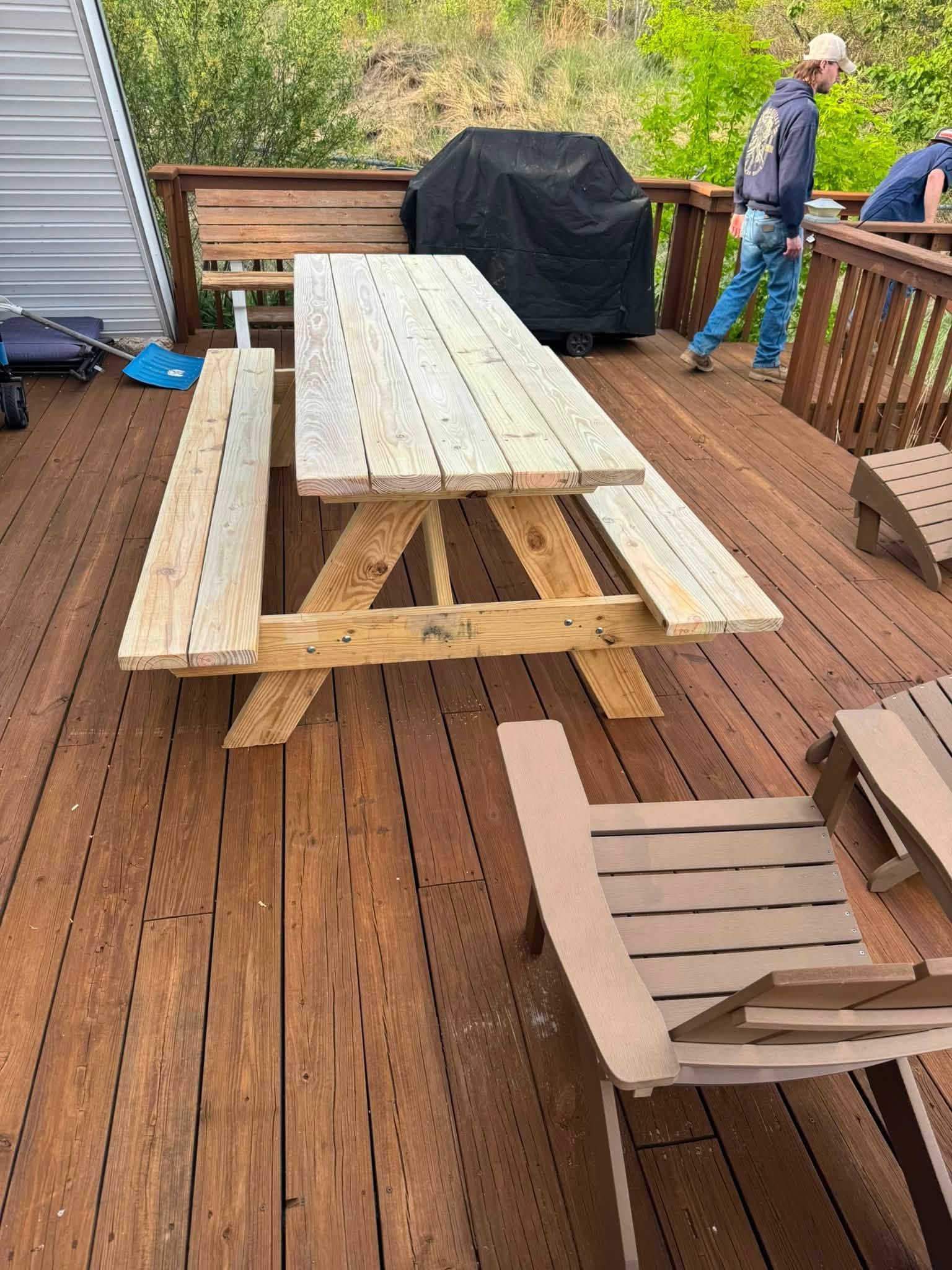
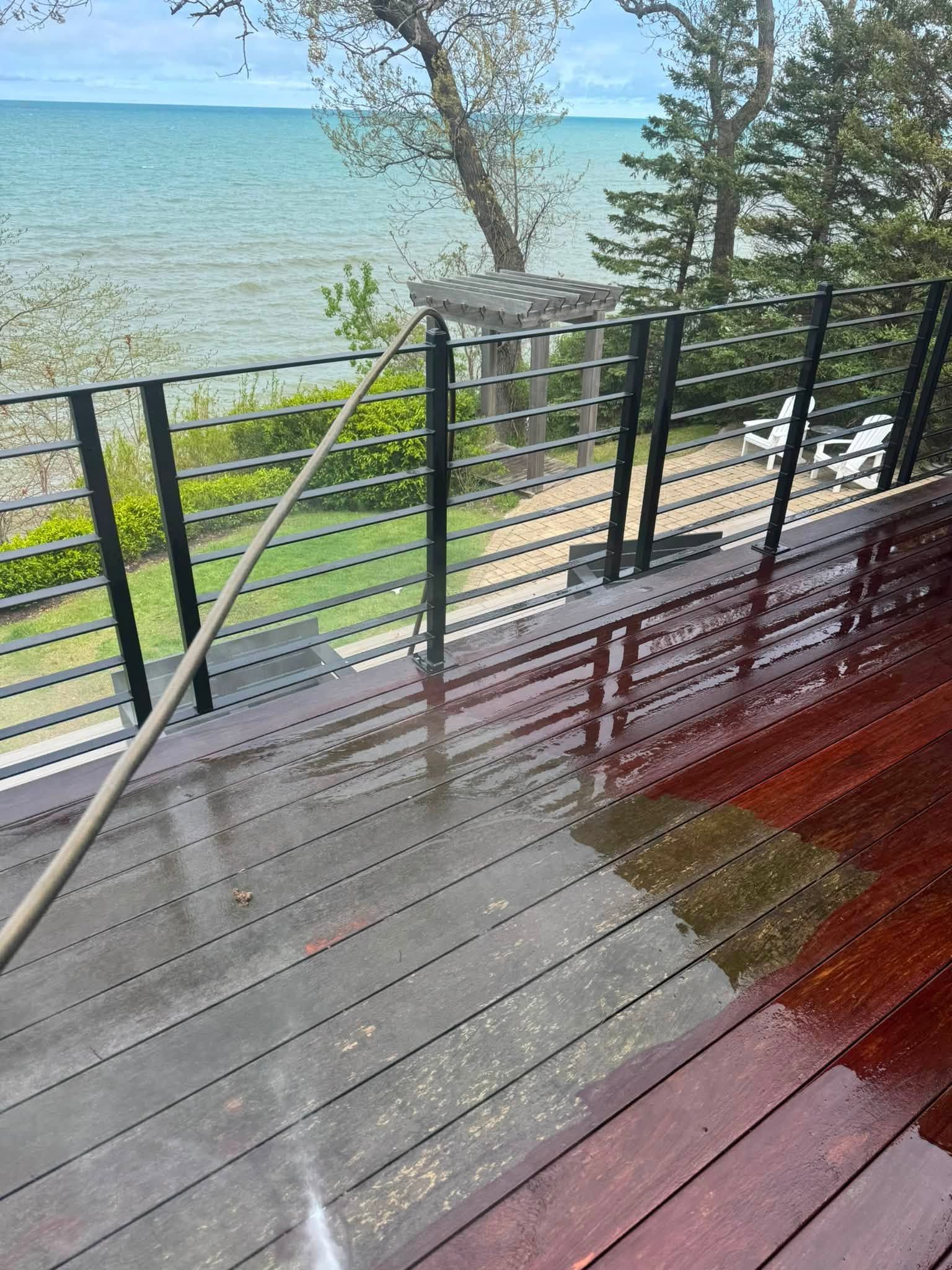
Wood decks deteriorate from moisture exposure, UV damage, and freeze-thaw cycles common in Southwest Michigan, leading to splintered boards, loose railings, and structural failure that creates safety hazards. Kalmer's Consulting designs and builds custom decks with an emphasis on composite decking, which eliminates the annual maintenance required by wood and resists warping, fading, and insect damage. Projects include decks, railings, stairs, and custom layouts that complement each home's architecture and expand usable outdoor space for entertaining and relaxing.
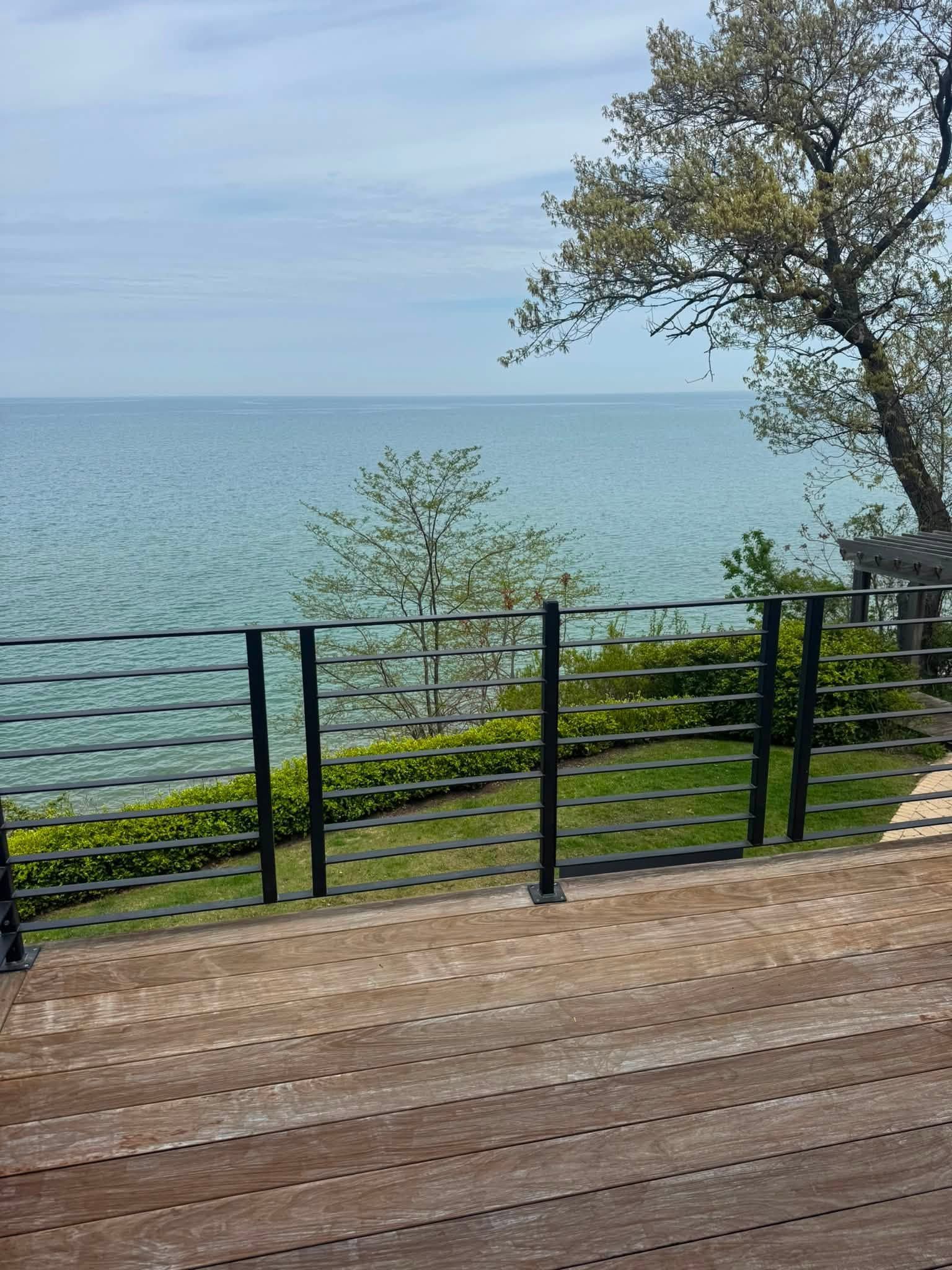
Construction begins with in-person site evaluations to assess soil conditions, property grade, and existing structures that affect deck placement and size. Footings are poured below frost depth to prevent heaving, joists are spaced according to decking manufacturer specifications to prevent sagging, and flashing is installed where the ledger attaches to the house to direct water away from the band board. Composite decking requires hidden fasteners that allow thermal expansion without buckling, and railings are installed at code-required heights with balusters spaced to prevent gaps larger than allowable limits.
Schedule a site evaluation to review your property's layout and discuss deck design options.
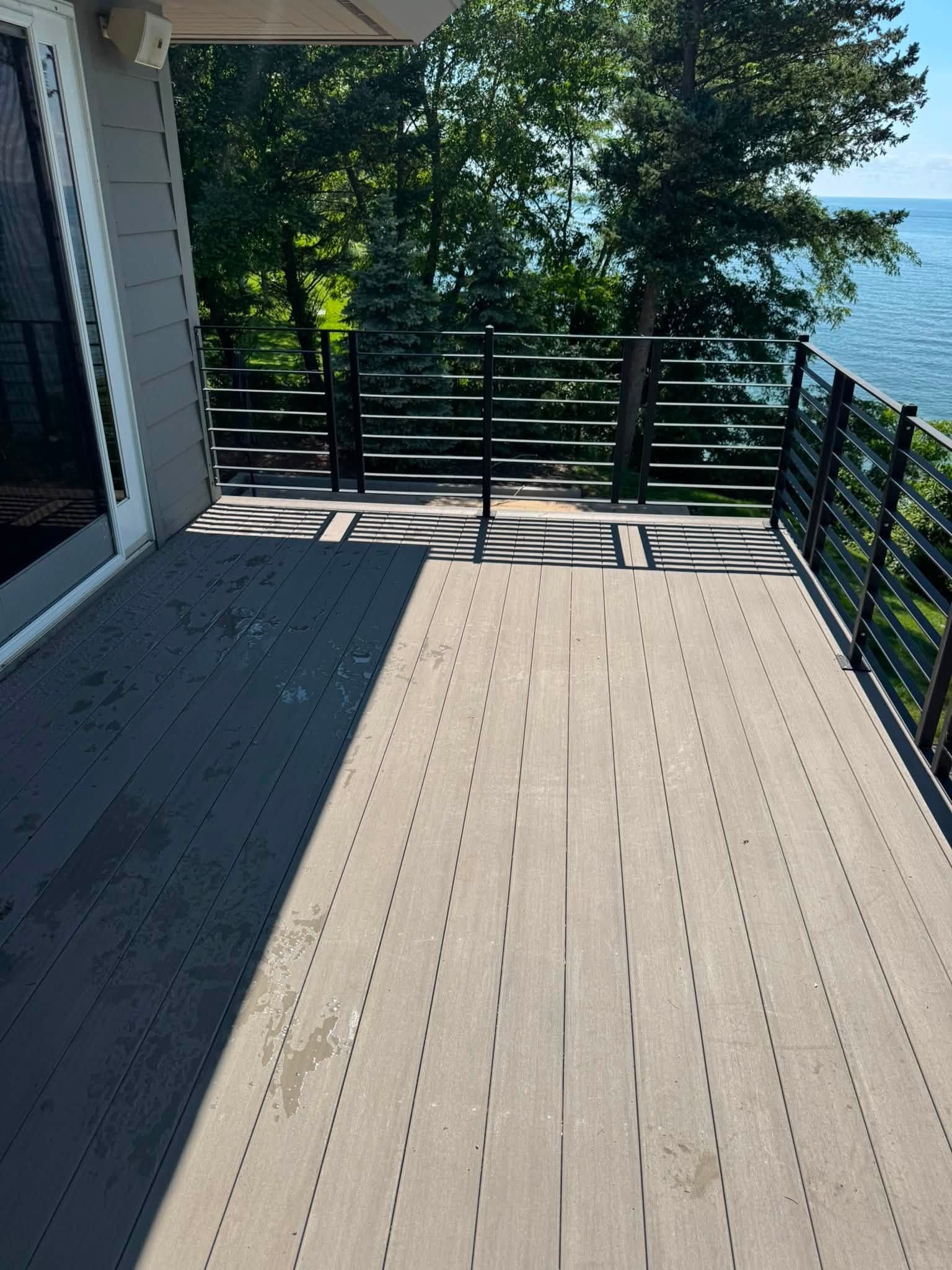
How Composite Decking Addresses Long-Term Maintenance
Composite decking combines wood fibers and plastic polymers to create boards that resist moisture absorption, which prevents the rot and splintering that occur with pressure-treated lumber. The material doesn't require annual staining or sealing, which eliminates recurring costs and labor. Color is molded throughout the board rather than applied as a surface coating, so scratches and wear don't expose raw material that needs refinishing.
After construction completes, the deck surface remains flat without cupping or warping, railings stay secure without loose balusters, and stairs are stable with consistent tread depth. You notice that the deck doesn't splinter underfoot, composite boards don't fade noticeably during the first few years, and rain dries quickly without leaving standing water that promotes mildew. The structure integrates with existing landscaping and provides defined space for furniture, grills, and outdoor entertaining without requiring constant upkeep.
Custom layouts accommodate property features like trees, slopes, and door locations, with multi-level designs that create distinct zones for dining and lounging. Stairs connect the deck to ground level with landings where required by code, and lighting can be integrated into posts or railings to improve visibility during evening use. Homeowners throughout Southwest Michigan benefit from decks that expand outdoor living without the maintenance burden of traditional wood construction.
What Property Owners Usually Ask
Homeowners considering deck construction often ask about materials, design flexibility, and how composite decking performs compared to wood before committing to a project.
What are the long-term benefits of composite decking?
Composite decking eliminates annual staining and sealing, resists moisture damage that causes wood to rot, and maintains color consistency for years without fading as severely as painted or stained wood. The material doesn't splinter, which makes it safer for barefoot use, and it withstands freeze-thaw cycles in Buchanan without cracking or warping.
How are custom layouts developed?
Layouts are developed during the site evaluation by measuring the property, discussing how you plan to use the space, and identifying obstacles like trees or grade changes. The design accommodates door locations, integrates stairs where needed, and creates multi-level sections if the property's slope or intended use benefits from distinct zones.
When should deck construction be scheduled?
Construction is scheduled after design approval and once weather allows footings to be poured and set properly. Spring and summer are common construction periods in Southwest Michigan, though fall projects can complete before freezing temperatures if timelines align. Site evaluations can occur year-round to plan projects for the next building season.
What does deck construction include beyond the surface?
Construction includes footings poured below frost depth, structural framing with joists and beams sized for load requirements, ledger attachment with proper flashing, composite decking installation with hidden fasteners, and railings installed to code height with secure balusters. Stairs and landings are built where required, and the finished deck is inspected for structural integrity.
How does composite decking compare to pressure-treated wood?
Composite decking costs more initially but eliminates recurring maintenance expenses and lasts longer without replacing rotted boards. Pressure-treated wood requires staining every few years and splinters as it ages, while composite remains smooth and retains appearance with only periodic cleaning. Both materials provide structural strength, but composite offers better long-term durability and reduced upkeep.
Kalmer's Consulting builds custom decks for homeowners throughout Southwest Michigan, creating low-maintenance outdoor spaces tailored to each property. Arrange an in-person consultation to review your yard and explore design possibilities.